Swimming.org is home to everything you need to know about swimming. If you are a parent, a non swimmer or just want to improve your technique this is the section for you.

In British Swimming you will find information about the world of high performance sport, including the disciplines of Swimming, Diving, Synchronised Swimming, Water Polo and Disability Swimming.

The ASA is the governing body for the sport in England. In this section you will find all you need to know about joining a club or competing in England and becoming a swimming teacher or coach.

The IoS delivers the ASA’s courses and is a member organisation. Whether you are a teacher, coach, employer or club you will find everything you need to know about qualifications or educating your workforce.

Accessibility - Text Only - Display Options - Accessibility

Your Open Water checklist

Share this page

So you’ve put in the hard hours of training in the pool, you’ve bought the gear and you’re ready to go - you think!

If you're still a bit unsure as to whether you're ready for your open water swim, take a look at our checklist to make sure you're totally prepared for the challenge ahead.

After all, completing an open water swim - in any conditions - is a fantastic achievement and something to be proud of so you want to make sure your preparation is perfect.

Swimfit's Open Water Checklist

  1. Do you know who you are swimming with?
  2. Do you know what the weather conditions will be for your swim?
  3. Have you swum in the open water before?
  4. Do you know the route you are taking?
  5. Do you know where you will enter the water?
  6. Do you have a wetsuit and have you practised swimming in it?
  7. Do you know the temperature of the water?
  8. Do you know what you will eat before and after your swim?
  9. Do you have goggles and lubricant?

  • Do you know who you are swimming with?

It’s very dangerous to swim open water on your own, no matter how confident a swimmer you are. Make sure you’re in the water with at least one other person. If you don’t know anyone interested in swimming open water with you, there are plenty of triathlon and open water clubs who do group open water swims.

  • Do you know what the weather conditions will be for your swim?

Weather can play a huge part in the difficulty of open water swimming conditions. Fog, snow, rain, wind – all can make open water swimming challenging to say the least and if you ever feel unsafe in the water, get out.

While a sunny day might sound like dream weather for open water swimming, it’s not dream weather for your skin so pack the WATERPROOF sun cream.

  • Have you swum in open water before?

No matter how far you can swim in the pool, it’s always good to get a taste of open water swimming before you compete in an event. The first time you swim outdoor will be a bit of a shock to the system so the more you are used to it, the better you will perform.

  • Do you know the route you are taking?

Seems like a fairly simple one but you MUST plan your route carefully and make sure someone else knows where you are going as well. Don’t put yourself in danger by swimming across ferry routes or areas with lots of boats – they will NOT be looking out for you so don’t put yourself in their line.

  • Do you know where you will enter the water?

Again, this may not be your biggest worry but you should plan where you are entering the water. There may be hazards on the floor as you enter which could cut your feet. If you're swimming in a location recommended to you by another, ask them where they got in the water and how safe it was.

  • Do you have a wetsuit and have you practised swimming in it?

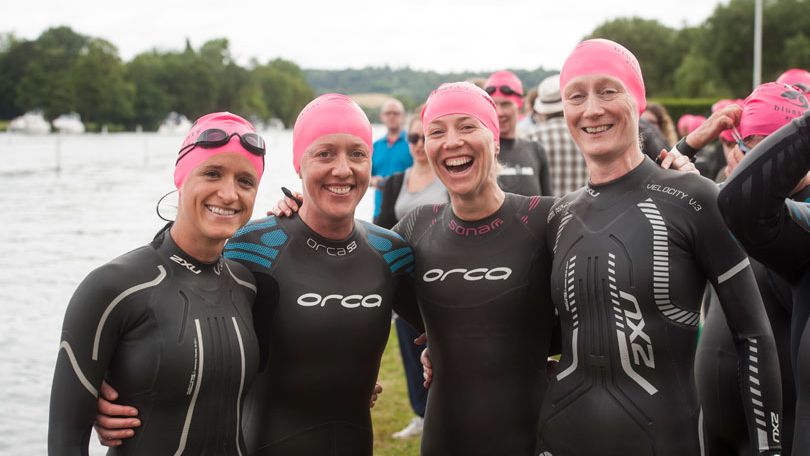
Wetsuits are highly recommended for open water swimming. They keep you warm and add to your buoyancy, making it easier to swim in choppy water. Wearing a wetsuit does change your stroke slightly so it’s best to practice in a pool beforehand.

Need help ordering a wetsuit - take a look at Speedo's range here.

  • Do you know the temperature of the water?

Swimsuits will keep you warm but the temperature of the water will still be much colder than your local pool. Diving straight in is not recommended as this could leave you immediately short of breath. You should stay warm as you continue to swim but if you feel your body getting too cold, get out of the water.

A swim hat is another essential for keeping heat in and the brighter coloured the better as you will be easier to see.

  • Do you know what you will eat before and after your swim?

Diet is very important for competitive swimmers – you need your energy boost at the right time for optimum performance. Well it’s no different for people taking on an open water challenge.

Eat a carbohydrate and protein rich meal two or three hours before your swim and then a snack like fruit or energy food an hour before your swim. Help your body repair muscles by refuelling with protein and complex carbs within 30 minutes of finishing your swim.

For more dietary tips, click here.

  • Do you have goggles and lubricant?

Swimming in lakes, rivers and seas means water visibility is poor to atrocious. Hopefully your sighting technique means you will be comfortable looking ahead while you’re swimming but make sure you wear goggles to help. If you’re swimming in a group, tuck your goggle strap into your swim hat so they aren’t knocked out of position by accident.

Lubricant isn’t an essential but it’s a very useful tip for putting around the neck to avoid chaffing from your wetsuit. Use a non-petroleum based lubricant which will not damage the wet suit.

Swimfit's Open Water Checklist

Useful?

8

Talk

  • 2

    7.41am 6th July 2011
    Maureen Londra from Fife, Scotland

    Please also check for weirs in lochs. Tide times are crucial to know when learning about the best times to swim. Be aware of rip currents and what to do if you become caught in one.  Becoming familiar with popular locations by acquiring local knowledge about a stretch of water is invaluable. Learn what to do in the event of someone in the group becoming hypothermic. Also make sure that everyone in the group have learned a hand signal to check if each of you is ok as sometimes the noise of the waves etc can make it difficult to hear each other talking / shouting. Last but not least - ENJOY IT grin The pleasures of open water swimming are enormous when compared to pool swimming but not for everyone.

  • 1

    9.36pm 6th May 2011
    Pamela Lievesley from Ashtead, Surrey, England

    At least as important - do you know where you are going to get out of the water?  Currents or tides may make it impossible to swim back to your starting point.  High banks or unpleasant vegetation (stinging nettles, brambles) may mean you have to swim a long way before finding a place to get out.  Survey the route in detail before you commit yourself to getting in.  And carry a pair of shoes for the walk back.  I tie Crocs (which float) in a drawstring bag to the back of my costume.

Swimming.org is home to everything you need to know about swimming. If you are a parent, a non swimmer or just want to improve your technique this is the section for you.

In British Swimming you will find information about the world of high performance sport, including the disciplines of Swimming, Diving, Synchronised Swimming, Water Polo and Disability Swimming.

The ASA is the governing body for the sport in England. In this section you will find all you need to know about joining a club or competing in England and becoming a swimming teacher or coach.

The IoS delivers the ASA’s courses and is a member organisation. Whether you are a teacher, coach, employer or club you will find everything you need to know about qualifications or educating your workforce.

Accessibility - Text Only - Display Options - Accessibility

© 2011 British Swimming & The ASA. All Rights Reserved. Privacy Policy

Countdown to
Olympic Games

Games Time Companion site
Coming soon

Countdown to
Paralympics

Close