Swim England Open Water Swimming Hub
Swim England join forces with key organisations to promote water safety during Drowning Prevention Week
June 15, 2026 News and UpdatesSwim England, Severn Trent, Staffordshire Fire and Rescue and Royal Life Saving Society are coming together to promote water safety, as part of National Drowning Prevention Week (13-20 June).
The organisations are uniting to amplify the message of keeping safe, after there was a staggering 15 tragic deaths caused by drowning during the UK May Heatwave. This follows 200 accidental, preventable drowning deaths in 2025.
While currently the UK isn’t seeing temperatures as high as 30 degrees, raising awareness and sharing life-saving advice all year round is key in helping to keep everyone safe in and around water, particularly when it comes to swimming.
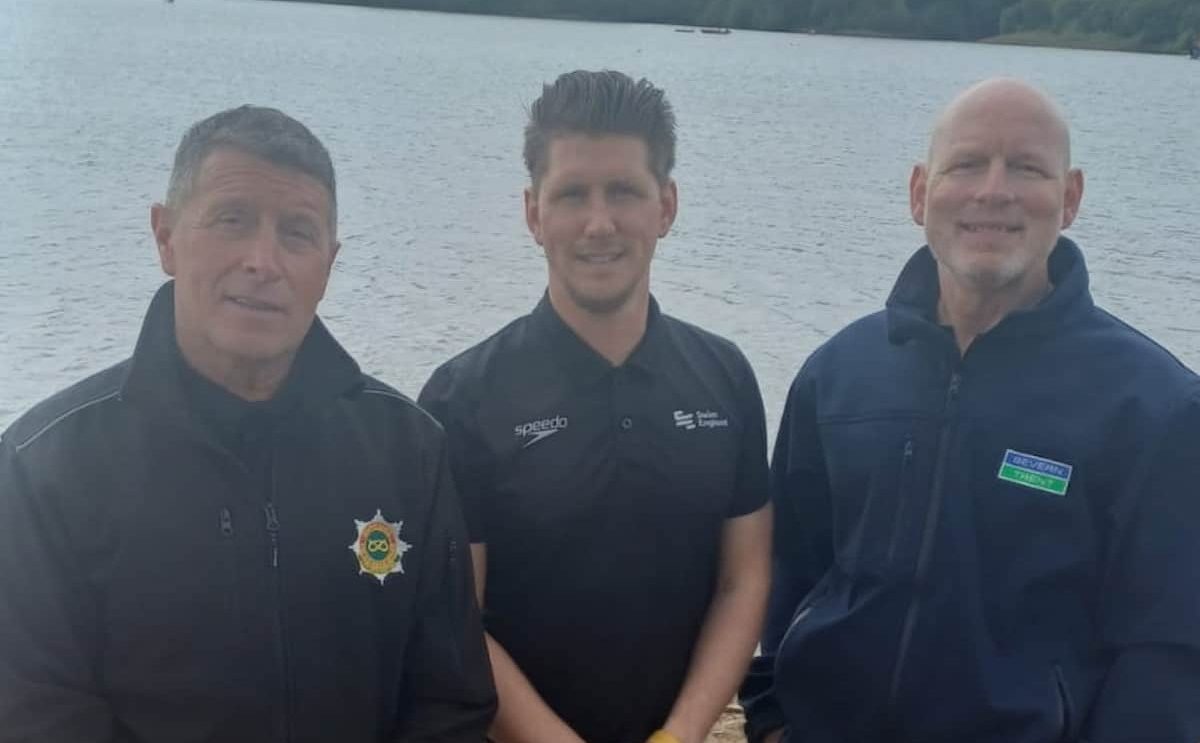
Based on the side of Severn Trent’s Tittesworth Reservoir, set amongst the Roaches, leaders from Swim England, the Fire Service and Severn Trent encouraged people to think about swimming safely and being choiceful with where, while sharing practical advice to help everyone enjoy open water with confidence.
Severn Trent and Swim England are encouraging everyone to follow these four essential principles of the Water Safety Code to stay safe around water:
Stop and Think – Always Swim in a Safe Place
Choose lifeguarded beaches, supervised pools, or organised sessions whenever possible. Take time to assess your surroundings, looking for potential hazards such as cold water, currents, deep areas, or submerged objects. Always follow safety signs and local advice to avoid dangerous or restricted areas.
Stay Together – Never Swim Alone
Always swim with a friend, family member, or as part of a group. Never enter the water alone. Children should be closely supervised at all times and kept within arm’s reach. Having someone nearby ensures help can be raised quickly if needed.
Float to Live – Learn to Float
If you fall unexpectedly into water, fight the instinct to panic. Turn onto your back, spread your arms and legs, and float to live until your breathing is under control. Once calm, call for help or swim to safety. Floating helps conserve energy and reduces the risk of drowning.
Call for Help – Dial 999 in Emergencies
If someone is in trouble, act quickly:
- Call 999 or 112 and ask for help
- At inland waters, request the Fire and Rescue Service
- At the coast, ask for the Coastguard
Use lifesaving equipment such as throw lines or flotation aids to help others, but never put yourself at risk by entering the water unless it is safe to do so.
Severn Trent say while it always encourages visitors to come enjoy it’s reservoirs, they are operational sites that are deeper than they look and have machinery underneath pulling and pushing water – making them extremely dangerous to enter without any supervision.
Adam Goymer, National Water Safety Manager at Swim England said: ““National Drowning Prevention Week is a great opportunity to highlight how people can enjoy the water confidently and responsibly.
Following the Water Safety Code is a simple way to prepare, understand your surroundings and make informed choices before entering the water.
Knowing what to do in an emergency and how to respond if you or someone else get into difficulty can make a life‑saving difference.”
Doug Clarke, Water Resources Lead at Severn Trent said: “Our reservoirs look really tempting on a hot sunny day, but underneath the water is much colder than you’d expect.
The role of the reservoir is to provide drinking water to our customers, to do that water is constantly moving in and out creating strong currents that even the strongest swimmers would struggle in.
“We hope that by sharing advice with others, and how to keep safe, that together we can reduce the risk of anything happening. There are plenty of other local options to take a dip and be safer, and the last thing we’d want is anyone to find themselves in trouble.”