Go Swimming has everything you need to know about swimming. If you are a parent, a non swimmer or just want to improve your technique this is the section for you.

In British Swimming you will find information about the world of high performance sport, including the disciplines of Swimming, Diving, Synchronised Swimming, Water Polo and Disability Swimming.

The ASA is the governing body for the sport in England. In this section you will find all you need to know about joining a club or competing in England and becoming a swimming teacher or coach.

The IoS delivers the ASA’s courses and is a member organisation. Whether you are a teacher, coach, employer or club you will find everything you need to know about qualifications or educating your workforce.

Accessibility - Text Only - Display Options - Accessibility

A Good Swimming Lesson

Discover on this page the five key elements that make a good swimming lesson, as well as answers to questions you may have about teaching methods, your child’s progress and pool rules.

We all want to know our children are getting the best possible education. Well, in the video above parent and ASA head of teaching and coaching research Ian Freeman tells you the top five things to look out for at a swimming lesson.

Learn about swim21 here, this is your guarantee that your lesson provider is using ASA best practice.You'll learn about the British Gas ASA Learn to Swim Pathway, teacher qualifications and the specific skills your child will be working on.

Once you have heard Ian's introduction you may have some questions. Below you can find answers to some of the questions we regularly receive from parents about teaching methods, progress and regulations.

Teaching Methods

What is likely to happen in lessons?

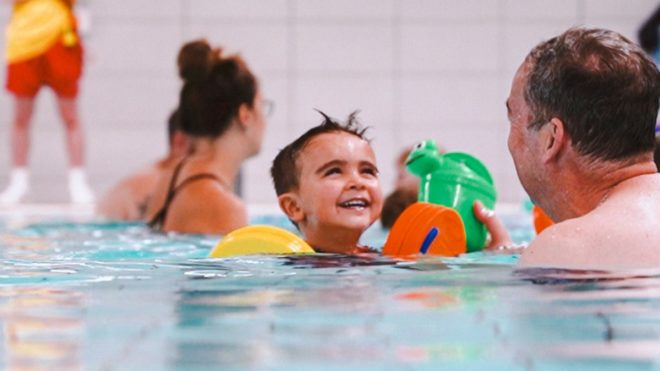
All children should be having fun. They should be involved in games-based activities to help them learn core swimming skills such as breathing, submerging and moving in the water.

The swimming strokes should be introduced gradually once the child has acquired the basic skills. Most lessons last around 30 minutes and children should be as active as possible throughout the lesson.

When children are learning to swim, should the teacher be in the pool?

Where the group is small and the children are young then it may be appropriate for the teacher to be in the water with them.

The ASA recommends a fully qualified (ASA Level 2) teacher leads the session from the poolside, with a support teacher in the water.

Where a programme feels it is important to have teachers in the pool we recommend a ratio of two swimmers per teacher maximum.

Will my four-year-old be safe in a group lesson?

The swimming teacher should assess your child at the start of the lesson to ensure that he or she is suitable for the group. They will take into account all health and safety implications, so there should be no issues for your child in a group lesson.

If you have any concerns speak to the swimming lesson co-ordinator.

The swimming teacher dunks my son’s head under the water. Is this normal?

No, teachers should refrain from physically forcing children into activities. This is for safeguarding reasons and because the child will not learn if the skill is being forced. Children have to understand why they are doing it to be able to consistently carry out the skill.

Will my son learn faster in a one-to-one class? Will it be less fun?

There is the possibility that your child will achieve more in one-to-one lessons because there are fewer distractions from others in the class and because they are the focus.

The ASA recommends group lessons because children benefit from personal development by learning new skills and socially interacting in a group.

Your Child's Progress

My child still can't swim without a float despite months/years of lessons. Is this normal?

Your child should have the opportunity to remove floatation aids during each swimming lesson to avoid dependence on them and to be able to develop the core swimming skills.

Perhaps speak to the swimming teacher about this and look to move your child out of using flotation aids in the coming months if appropriate.

Should I complain about my child’s swimming lessons if I am not happy with my child’s progress?

Yes, they are providing a service that you are paying for. Be constructive in your comments and try to pinpoint what you are unhappy with.

Once you have identified the issues ask to speak to the swimming co-ordinator and discuss possible solutions.

My child’s making little prgoress. What can I do?

Swimming lessons that are built around the British Gas ASA Learn to Swim Framework are designed to be progressive. There are clear stages in the framework and each stage can be passed by reaching set outcomes. 

Some children become stuck on a particular skill and cannot fully complete the stage. When this happens, teachers will have an idea on how to move things on.

Speak to your child's teacher to see if there is anything you can do in family swimming time that will help. Should you still have queries contact the swimming co-ordinator at your leisure centre.

Pool Rules and Regulations

My son isn’t allowed to start swimming lessons because he isn’t tall enough. Is this right?

Some organisations do try and use other methods of assessing a child’s suitability for swimming lessons. If you feel he is ready perhaps explain this to the swimming programme and if not, try another facility.

My two kids are both under four.  I have to be in the water with them during lessons. What happens to one child while I am in the water with the other?

Due to safety implications you will need support for both your children in the water. Enlist a friend or grandparent to go along to support you in the lessons, or consider a crèche for one child while the other is in the pool.

Check out our pool admission policies Q&A here for more.

PART-TIME REWARDING CAREERS CAN BE FOUND
Seeking a job to fit school hours?
Trying to find a rewarding career?
Want to nurture the next Tom Daley?
Become a swimming teacher or coach. Start your job hunting here