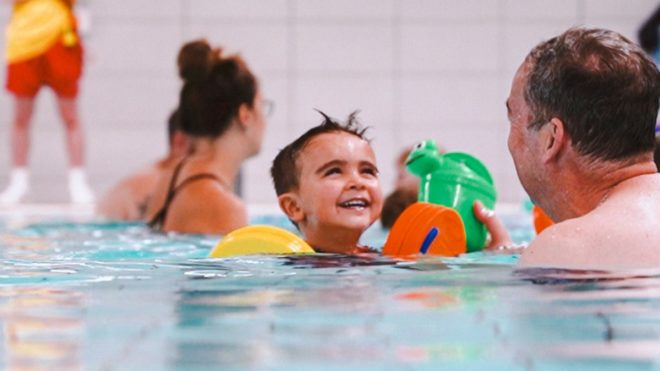
Go Swimming has everything you need to know about swimming. If you are a parent, a non swimmer or just want to improve your technique this is the section for you.

In British Swimming you will find information about the world of high performance sport, including the disciplines of Swimming, Diving, Synchronised Swimming, Water Polo and Disability Swimming.

The ASA is the governing body for the sport in England. In this section you will find all you need to know about joining a club or competing in England and becoming a swimming teacher or coach.

The IoS delivers the ASA’s courses and is a member organisation. Whether you are a teacher, coach, employer or club you will find everything you need to know about qualifications or educating your workforce.

Accessibility - Text Only - Display Options - Accessibility

Certificates And Badges

Sponsored by Kellogg’s, ASA certificates and badges help to reward your child for the hard work he or she puts into learning to swim.

Complementing the British Gas ASA Learn to Swim Pathway, the ASA awards scheme is the most successful of its kind in both British and international sports.

As many as two million certificates and badges are awarded each year. Find out more about each one below.

Simply click on the buttons to learn about the award and what your child will have achieved to earn it.

Swim a Song Awards

Swim a Song is a fun, innovative programme for introducing babies and young children aged four months to four years to the world of swimming.

Parents or guardians join in as youngsters work their way through 10 action categories based on 32 songs, all adapted from well-known nursery rhymes.

Accompanying the programme are six certificates and badges designed to reward your child as Swim a Song progresses. The grading mirrors the increasing difficulty of the songs and actions. There is the Multi Action Award, the Entry Award, the Exit Award and Stages 1, 2, and 3 awards.

There is also a sticker chart so that you can record your child's actions, allowing you to monitor progress towards the six awards. These awards are pre-stage 1 of the ASA Learn to Swim Framework.

Swim A Song Award

Step 1 (0-18months)

By the end of this step your child should be able to:

  1. Enter the water comfortably supported fully by an adult.
  2. Kick or move legs with adult support.
  3. Allow for their face to be wet by adult.
  4. Float with adult support on their front or back.
  5. Place feet on wall with adult support. Adult then supports a push off wall and glide.
  6. Travel in different directions with adult support.
  7. Splash water with their hands.
  8. Reach and grab a toy.
  9. Move from horizontal to vertical position with adult support.
  10. Exit the water safely with adult support.

Step 2 (18-24 months)

By the end of this step your child will be able to:

  1. Enter the water comfortably supported by an adult.
  2. Kick and move legs continuously.
  3. Put face in the water and dip chin and mouth in and out independently.
  4. Travel on front and back for 2m with adult support
  5. Float on front with/without adult support.
  6. Float on back with/ without adult support.
  7. Push and glide off wall with adult support.
  8. Paddle with hands and feel the water.
  9. Reach, grab and throw toys in the water.
  10. Rotate 180 degrees either horizontally and vertically with adult support.
  11. Exit the water safely with adult support.

Step 3 (24- 36 months+)

By the end of this stage your child will be able to:

  1. Enter the water safely without adult support but under close supervision.
  2. Kick legs simultaneously and travel 2m with adult support.
  3. Put face in the water and blow bubbles.
  4. Travel on front for 2 m using aids with adult support.
  5. Travel on back for 2m using aids with adult support.
  6. Push and glide from wall without support of parent.
  7. Perform a star float on back with adult support behind the head and return to vertical position.
  8. Use arms and legs to travel 2m in any direction without support.
  9. Reach and catch toys on top of and under surface of water.
  10. Rotate 180 degrees either horizontally or vertically without adult support.
  11. Exit the water safely with adult supervision.

Duckling Awards

The Duckling Awards are designed to help babies and toddlers enjoy learning to swim with help from parents or guardians.

Your child can work towards five grades of colourful awards, each with its own certificate and badge. Each badge contains pictures of yellow ducklings depending on grade of award. The Duckling 1 badge has one duckling, while the Duckling 5 badge has five ducklings.

Buoyancy aids, such as armbands, can be used for the first four grades as the child learns to float and gets used to the water. The fifth and final grade has young swimmers jumping into the water, submerging, and floating and swimming five metres without aids. 

Awards are available in English or Welsh and are pre-stage 1 of the ASA Learn to Swim Framework.

Duckling Award

Duckling Grade 1

By the end of this stage your child will be able to:

  1. Make a supervised safe entry with adult support
  2. Kick 2 metres on the back with adult support
  3. Float on the back with adult support behind the head
  4. Blow bubbles at the water surface
  5. Wet the head without submersion
  6. Travel without assistance 2 metres to a floating object.

Duckling Grade 2

By the end of this stage your child will be able to:

  1. Make a sitting entry with adult support
  2. Blow an object for a distance of 2 metres
  3. Use a baby seat or other buoyancy aid and rotate through 180degrees without assistance
  4. Move 5 metres along the rail or wall without assistance
  5. Travel 3 metres using arms and/or legs without assistance
  6. Submerge the face with confidence

Duckling Grade 3

By the end of this stage your child will be able to:

  1. Make a supervised jump to an adult with or without support
  2. Kick 5 metres on the front holding a float
  3. Blow bubbles with the mouth underwater
  4. Float on front OR back without adult support
  5. Travel 5 metres on the front to the side of the pool
  6. Show a torpedo shape on front or back when pushed to a partner

Duckling Grade 4

By the end of this stage your child will be able to:

  1. Jump unaided, but supervised, into the water
  2. Submerge completely
  3. Rotate through 360° either horizontally or vertically
  4. Show a mushroom or a star float
  5. Travel without assistance 10 metres on the front or back
  6. Climb out of the water with assistance if required

Duckling Grade 5

By the end of this stage your child will be able to:

  1. Show the sequence to jump in the water, turn around, swim back to the point of entry and hold the rail or side
  2. Submerge completely and blow bubbles under the water
  3. Push and glide achieving a distance of 2 metres on the front or back
  4. Float on the front or back and regain standing/vertical position
  5. Swim 5 metres on the front or back using an over water arm recovery
  6. Exit safely showing correct use of the ladder (or steps if no ladder is available).

Alpha Step Awards

The Alpha Step Awards have been designed to build the confidence of children who may need additional support.

Providing small stepping stones for developing confidence, these three awards should be considered if your child is shy/timid or has disabilities.

They reward the development of the early stages of buoyancy, coordination, spatial awareness, breathing, and entering and leaving the pool.

The basic water skills and confidence gained through the Alpha Step Awards enable a smooth transition for your child to Stage 1 of the ASA Learn to Swim Framework.

Alpha Step Award

Achievements gained

By the end of this stage your child will have developed the following skills:

Entries

  1. Enter the water with support
  2. Enter the water with assistance
  3. Enter the water unassisted

Aquatic Breathing

  1. Blow to move a floating object over 3m
  2. Tolerate face being (splashed) wet
  3. With mouth submerged, blow bubbles

Spatial Awareness

  1. On the spot move selected object around
  2. While travelling, move objects in/through the water
  3. Move objects to/from a partner in various directions

Rotation

  1. Be rocked through the water with support
  2. Turn 360° with minimal assistance
  3. Lie back and move to a vertical position with support

Buoyancy

  1. Float with support
  2. Float on front with support
  3. Float on back with support

Co-ordination

  1. Be towed (forwards, backwards and sideways) in a variety of directions
  2. Travel through the water using limbs with minimal support
  3. Travel 3m on front with or without aids
  4. Travel 3m on back with or without aids

Exits

  1. Exit the water with support
  2. Exit the water with minimum support

Swimming Stroke Awards

If your child is keen to show their skills in individual strokes then this set of five awards could be the answer.

Covering backstroke, breaststroke, butterfly, freestyle and individual medley, these badge and certificate supported awards encourage swimmers to learn the correct skills in strokes, turns and finishes before learning to swim faster.

Before working towards these colour-coded awards the ASA recommends your child first secures the Competitive Start Award.

Swimming Stroke Award

Competitive Start Awards

The ASA's emphasis on learner safety continues with the Preliminary Competitive Start Award, complementing Stages 1-7 of the ASA Learn to Swim Framework and the Competitive Start Award for Stages 8-10.

Shallow diving can cause serious injuries if not done properly and by securing these awards your children will show they have the competence to dive in water 0.9-1.3m deep. This is a standard demanded for competitions under ASA law.

Teaching for the Preliminary Competitive Start Award starts in deep water before moving to the side of the pool and shallower water. Once this award has been secured learners work towards the Competitive Start Award to learn safe race dives from a starter block.

Competitive Start Award

School Speed Awards

The School Speed Awards are aligned with Stages 8-10 of the ASA Learn to Swim Framework and introduce your child to the world of competitive swimming.

These 12 awards are available in Bronze, Silver and Gold and cover front crawl, backstroke, breaststroke and butterfly. Each stroke and award type has its own qualifying time over 20yds, 20m, 25yds and 25m (see table below) to allow for different lengths of pool.

All strokes, starts and finishes need to comply with ASA law for children to secure the awards.

School Speed Awards

National Curriculum Awards

The ASA has worked closely with schools to improve swimming lessons. Swimming is a compulsory part of the National Curriculum and the ASA has developed National Curriculum Water Skills and Water Safety Awards to complement this.

Developed to run alongside the ASA Learn to Swim Framework, the Water Skills Award is given when your child can safely swim unaided for at least 25m and use a range of recognised strokes and personal survival skills. This should be by the end of Key Stage 2 on the National Curriculum.

The National Curriculum Water Safety Award assesses your child's knowledge and skills relating to water safety. Both Awards are available in English and Welsh. For more information contact your child's school.

National Curriclulum Awards

Safety and Survival Awards

Children's safety in the water is a major concern for parents and guardians, and the ASA's Safety and Survival Awards are designed to offer a little peace of mind.

Covering survival knowledge, awareness of dangers and vital life-saving information, this range of four awards is a must for any parent to consider for their child.

The Preliminary Safety Skills Award offers your children an introduction to water safety and is targeted at swimmers who no longer use buoyancy aids.

The Personal Survival Awards are in two levels and complement Stages 8-10 of the ASA Learn to Swim Framework. They ensure learners know how to react if they find themselves in difficulty by testing them in real-life situations.

Finally, a natural follow-on from the Personal Survival Awards, the Water Rescue Award teaches your children basic lifesaving techniques. A wider range of skills in this area can be gained by taking the Rookie Lifeguard Award.

Personal Survival Awards

Rookie Lifeguard

If your children are budding lifeguards, then the Rookie Lifeguard Award developed by the Royal Lifesaving Society UK in conjunction with the ASA, should be just what you are looking for.

As well as offering parents the comfort of knowing their children are aware of the dangers of swimming in open water, the Bronze, Silver and Gold stage awards ensure children have a solid safety education, and have learned rescue and resuscitation techniques.

Each stage is sub-divided into three levels and each stage runs roughly for eight to 10 weeks. Your children can enter a course at any point during the stage and progress at his or her own speed.

The Rookie Lifeguard Programme also comes with the Water Safety Award, the Life Support Award and the Achievement Awards. There are also other bolt-on awards that can be achieved, such as Snorkelling, Paddle Board and Beach Awards.

Rookie Lifeguard Award

Swimming Challenge Awards

The Swimming Challenge Awards are for young people working towards Stages 8-10 of the ASA Learn to Swim Framework, with Bronze, Silver, Gold and Honours Awards available.

Your children will be challenged to develop a wide range of skills and stamina in order to achieve the awards, with a focus on good stroke style. It doesn't have to comply with ASA law but strokes must be co-ordinated, smooth and efficient.

Together with four certificates and accompanying badges, the awards also come with a metal lapel badge with butterfly fastener as an optional extra.

Swimming Challenge Awards

Water Skills Awards

Well suited to intensive activity programmes, these awards reward your child for successfully developing eight out of 10 skills across six grading levels, or six out of eight skills if your child has a disability.

The six grades are represented by six colour-coded certificates and accompanying badges and focus on confidence, versatility, skills and endurance. Grades 1-4 complement Stages 1-7 of the ASA Learn to Swim Framework, and Grades 5-6, Stages 8-10.

By the time your child succeeds at Grade 6, he or she should be able to swim 75m within two minutes using three different strokes.

Water Skills Awards

Learn To Swim Stages 1-7 Awards

These awards are designed around the British Gas ASA Learn To Swim Pathway, the most successful sports programme of its kind and a guarantee to parents that their children are receiving the best possible instruction.

Covering 7 stages of the syllabus, the colour-coded badges and certificates have been designed to reward your child for the effort they put into each stage.

Stages 1-7 help develop the core range of FUNdamental skills your child needs to be confident, competent and safe in the water, while Stages 8-10 offer the opportunity to develop skills from disciplines such as diving and water polo.

Learn To Swim Awards

Stage one

At the end of this stage your child should be able to:

  1. Enter the water safely
  2. Move forwards for a distance of 5 metres
  3. Move backwards for a distance of 5 metres
  4. Move sideways for distance of 5 metres
  5. Scoop the water and wash face
  6. Be at ease with water showered from overhead
  7. Move into a stretched floating position using aids, equipment or support
  8. Regain an upright position from on the back, with support
  9. Regain an upright position from on the front with support
  10. Push and glide in a horizontal position to or from a wall
  11. Take part in a teacher-led partner orientated game
  12. Demonstrate an understanding of pool rules
  13. Exit the water safely

Stage two

At the end of this stage your child should be able to:

  1. Jump in from poolside safely
  2. Blow bubbles a minimum of three times rhythmically with nose and mouth submerged
  3. Regain upright position from the back without support
  4. Regain an upright position from the front without support
  5. Push from wall and glide on the back
  6. Push from wall and glide on the front
  7. Travel on the back for 5 metres, aids or equipment may be used
  8. Travel on the front for 5 metres, aids or equipment may be used
  9. Perform a rotation from the front to the back to gain an upright position
  10. Perform a rotation from the back to the front to gain an upright position

Stage three

At the end of this stage your child should be able to:

  1. Jump in from poolside and submerge (min depth 0.9m)
  2. Sink, push away from wall on side and maintain a streamlined position
  3. Push and glide on the front with arms extended and log roll onto the back
  4. Push and glide on the back with arms extended and log roll onto the front
  5. Travel on the front, tuck to rotate around the horizontal axis to return on the back.
  6. Fully submerge to pick up an object
  7. Answer correctly three questions on the Water Safety Code
  8. Travel 10 metres on the back
  9. Travel 10 metres on the front

Stage four

At the end of this stage your child should be able to:

  1. Demonstrate an understanding of buoyancy
  2. Perform a tuck float for 5 seconds
  3. Perform a sequence of changing shapes (minimum of three) whilst floating at the surface
  4. Push and glide from the wall to the pool floor
  5. Kick 10 metres backstroke (one item of equipment optional)
  6. Kick 10 metres front crawl (one item of equipment optional)
  7. Kick 10 metres butterfly on the front or on the back
  8. Kick 10 metres breaststroke on the back (equipment optional)
  9. Kick 10 metres breaststroke on the front (equipment optional)
  10. Perform on the back a head first sculling action for 5 metres in a horizontal position
  11. Travel on back and roll in one continuous movement onto front
  12. Travel on front and roll in one continuous movement onto back
  13. Swim 10 metres, choice of stroke is optional

Stage five

At the end of this stage your child should be able to:

  1. Perform a horizontal stationary scull on the back
  2. Perform a feet first sculling action for 5 metres whilst horizontal on the back
  3. Perform a sculling sequence with a partner for 30-45 seconds to include a rotation
  4. Tread water for 30 seconds
  5. Perform three different shaped jumps into deep water
  6. Swim 10 metres backstroke (refer to the ASA expected stroke standards sheet)
  7. Swim 10 metres front crawl face in the water (refer to the ASA expected stroke standards sheet)
  8. Swim 10 metres breaststroke (refer to the ASA expected stroke standards sheet)
  9. Swim 10 metres butterfly (refer to the ASA expected stroke standards sheet)
  10. Perform a handstand and hold for a minimum of three seconds
  11. Perform a forward somersault, tucked, in the water
  12. Demonstrate an action for getting help

Stage six

At the end of this stage your child should be able to:

  1. Demonstrate an understanding of preparation for exercise
  2. Sink, push off on side from the wall, glide, kick and rotate into backstroke
  3. Sink, push off on side from the wall, glide, kick and rotate into front crawl
  4. Swim 10 metres wearing clothes
  5. Swim front crawl to include at least six rhythmical breaths
  6. Swim breaststroke to include at least six rhythmical breaths
  7. Swim butterfly to include at least three rhythmical breaths
  8. Swim 25 metres, choice of stroke
  9. Perform a ‘shout and signal’ rescue
  10. Perform a surface dive
  11. Exit the water without using steps

Stage seven

At the end of this stage your child should be able to:

  1. Swim 25 metres backstroke
  2. Swim 25 metres front crawl
  3. Swim 25 metres breaststroke
  4. Swim 25 metres butterfly
  5. Perform a movement sequence of 1 minute duration, in a group of three or more, incorporating a number of the following skills. Sculling: head first, feet first. Rotation: forward/backward somersault, log roll. Floating: star on the front/on the back, tuck float, create own. Eggbeater: moving, lifting one or both arms out of the water link skills with strokes and sculls
  6. Perform a sitting dive
  7. Swim 50 metres continuously using one stroke
  8. Swim 100 metres, using a minimum of three different strokes
  9. Tread water using eggbeater action for 30 seconds
  10. Complete an obstacle course (using minimum of four objects) with feet off the pool floor throughout

Learn To Swim Stages 8-10 Awards

Once a swimmer has reached Level 7 of the Learn to Swim Framework, it is recommended that they are then encouraged to take part in different aquatic disciplines to develop their fundamental sports skills covering competitive swimming, synchro, water polo, and diving.

The 12 awards are stages 8, 9, 10 water polo, stages 8, 9, 10 synchro, stages 8, 9, 10 competitive swimming and stages 8, 9, 10 water polo. All awards are available in English and Welsh.

You can learn more about the acheivements from each level in the teaching and coaching section in our ASA Zone. Click the relevant sport to go the page: competitive swimming, water polo, synchro, diving.

Learn To Swim Awards

Rainbow Stroke Awards

Covering distances of between five and 100m, the Rainbow Stroke Distance Awards complement Stages 1-7 of the ASA Learn to Swim Framework.

The Rainbow Stroke Distance Awards offer swimmers a further challenge after they have attained the Rainbow Distance Awards.

Covering front crawl, breaststroke, backstroke and butterfly at 5, 10, 15, 20, 25, 50 and 100m, the awards have been graded to offer your child achievable steps to help develop technique while having fun.

If after attaining all awards your child wants to take his or her stroke work further then you may want to consider the Swimming Stroke Awards.

Rainbow Stroke Distance Awards

Rainbow Distance Awards

Designed to complement the 10 stages of the ASA Learn to Swim Framework, the Rainbow Distance Awards are a range of bright, cheerful badges and certificates to help keep your child motivated while working through the individual Learn to Swim stages.

Swimming ability and stamina are the focus of the 19 awards. Children over five years old can work their way from the five metres with buoyancy aid Puffin award through to the 5,000m award, depending on which stage of the ASA Learn to Swim Framework they have attained.

If your child is working through Stages 1-7 of the Framework they can also work up to the 200m Rainbow Distance Award. Learners on stages 8-10 can secure up to the 1,500m award. Swimmers who have completed all stages can strive for 5,000m.

If your child doesn't want to stop at distance and fancies a further challenge, then the ASA has devised the Rainbow Stroke Distance Awards to act as a further incentive to improve.

On a note of caution, please be aware that your child securing the Rainbow Distance Award is not an indication that he or she is safe in deep water. The ASA has designed specific awards for safety and survival.

Rainbow Distance Award


Ask your swimming teacher or pool for more information on how your child can progress through the Kellogg’s ASA Awards Scheme. Find your nearest pool with our pool finder.
Find my local pool
Subscribe to Swimming Times today for all the latest aquatics news