Swim England Competitive Swimming Hub
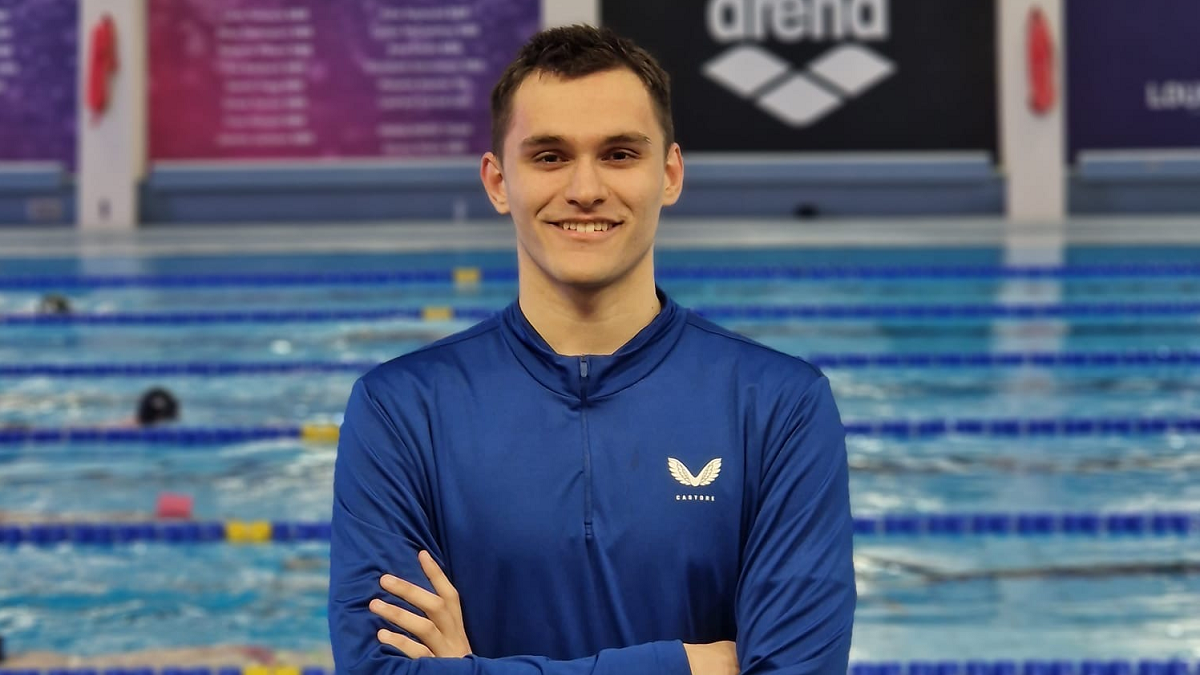
Henry Hughes shares his story ahead of representing DeaflympicsGB
May 9, 2025To mark Deaf Awareness Week, Swim England caught up with Deaflympic swimmer Henry Hughes to discuss his journey in the sport and his future ambitions.
A British South Asian swimmer whose deafness went undiagnosed for the first two years of his life will be flying the flag for Great Britain at the Deaflympics, an International Olympic Committee (IOC) sanctioned global event later this year.
Henry Hughes DLY has been selected to represent Great Britain and DeaflympicsGB at the 25th Deaflympics in Tokyo in November where he will be hoping to underline his growing reputation in the pool.
It will be Henry’s second appearance at the Deaflympics, his first coming in 2017 when, as a 13-year-old, he debuted in green and gold, the colours of Australia.
The former decorated Australian Deaf Swimming team captain, who also has two World Deaf Swimming Championships under his belt, swapped national allegiances last year following a dream move to the UK and is now on Loughborough University’s renowned swim programme, whilst also in the first year of a Sport Management degree.
“I spent nearly two years planning my move to Britain,” he explains. “I started sewing the seeds of it in October 2022 as I knew my time in Australia was drawing towards a close.
Before delving into Henry’s move to the UK and why he is flying the British flag this time around at the Deaflympics, let’s rewind the clock and go back to the start in Australia.
Background and falling in love with the sport
Henry is proudly Kiwi born but grew up in Sydney, which is the home of some of the world’s most recognised beaches, and sports are a staple for many of the city’s inhabitants, particularly youngsters.
Henry and his four brothers were no different and were encouraged to become proficient in sport in general. Henry’s attention was drawn to swimming and was raised by his strong mother. However, before getting into swimming, it was only when his younger brother was diagnosed as being deaf that the whole family decided to get tested and they discovered that Henry was also deaf.
“My mother is deaf as well and she raised me and my brothers whilst my dad went out to work for the family,” he says. “It was a huge shock to them because I’d been in their lives for two years and they didn’t have any inkling that I couldn’t hear.
“That meant I was delayed in terms of my development and speech, I had to catch-up on many things to put myself on a better footing than my peers, my mother was so adamant about that.
“It was easier as a young deaf person to be in an individual sport than a team back then since you can focus more on yourself than everyone else around you. Deaf athletes in sport is more normalised today because of the somewhat awareness of society, but it is still a big stigma in 2025.”
Henry fell in love with the water which ignited his spark in the sport, but it came about in an unusual manner, he explains.
“We have lots of beaches in Australia and so many activities are based around the beach. My mum had a running joke that she wanted to know I could swim for my life if I was in the ocean as we would not be able to hear a shark alarm since we are both deaf.
“So that was my entry into swimming and then in 2012, my mum went to the UK to visit family, and she told me to watch the London Olympics and that’s when I saw swimming at its best and superstars like Michael Phelps, Adam Peaty and Katie Ledecky.
“That’s when I fell in love with the sport.”
Successes and adversities in the pool
Five years later, Henry, who has a cochlear implant on his right ear and a hearing aid on his left, was starring on the international stage at his first Deaflympics in Samsun, Turkey and admits it was a voyage of discovery for him.
“I didn’t really know anything about the Deaflympics,” he concedes. “I just didn’t realise that it was such a big, magnificent sporting and cultural event.
“I had a wonderful time back in 2017, I took part in five or six events and got personal bests in all of them and away from the pool I met a lot of great people who became lifelong friends, particularly from the American and British teams.
“I think that was the starting point for me wanting to represent Great Britain and one of the athletes on that team is now my teammate and best friend.”
After the Deaflympics, Henry opens up about his mental health and how he fell through all the clouds, from cloud nine to ground zero, to hit rock bottom.
“People did not understand the Deaflympics, what an achievement it was for me, I was not celebrated in the way that Paralympians and Olympians were. I went from racing internationally to locally and no one managed me back, that is when I went into depression, going through clubs hoping a coach would understand the value of a Deaflympian and my potential.
“I was at a point where I was running out of swimming clubs in Sydney that would be competitive enough to take me on. In the space of six years I’d had seven clubs, I hadn’t started and finished a season with a club since I left my childhood club, since I faced unforgettable adversities with coaches and swimmers that forced my hand to make a decision to seek elsewhere each time.”
Despite the adversities Henry went through, he competed at two World Deaf Swimming Championships, the latter before he left for the UK. He was named the Australia Deaf Swimming team captain and led Australia to its most successful result in more than 18 years at the time, with each of the six athletes medalling and claiming two bronzes in the relay himself.
“2023 Argentina was the pinnacle of my career so far, having left Australia on a high note by delivering the team’s most successful result in a long time as captain, with myself getting two medals in the relays.
“It was the best way to close a chapter of my life that I will be grateful to the Australia Deaf Team for giving to me.”
Switch to Great Britain and future ambitions with DeaflympicsGB
When Henry knew his time in Australia was up and he eventually drew up plans to make a voyage to British shores, something that was always a dream of his.
“I am quite tribal as a Sydney person and did not want to go to Queensland, known to be the sports state, as its lifestyle did not attract me. America didn’t appeal either at age 19, so naturally my attention turned to Britain which was a dream of mine since the 2012 Olympics.
“I really did not know much about Loughborough University, but I knew it had my degree. It was only when I did a little more research that I found out the university just happened to be the number one swim programme in the country and everything fell into place.
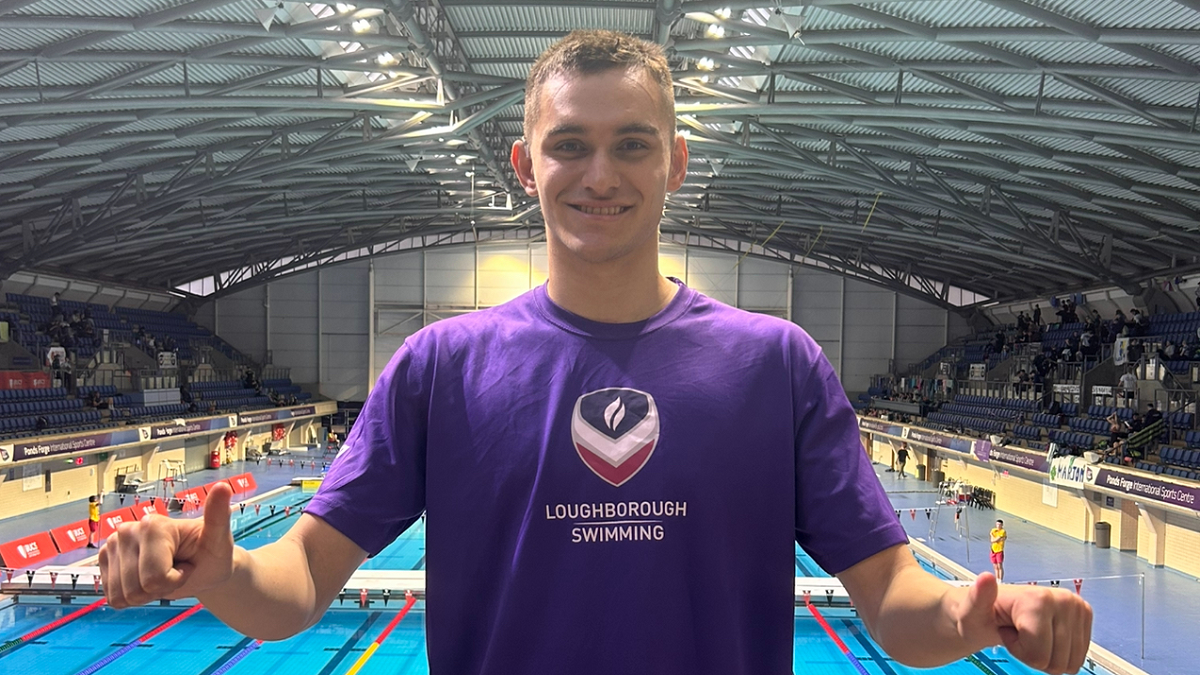
“Representing Great Britain is something I will always hold closely to my heart and I’m looking forward to what the team will do in Tokyo. However, the reality is that Deaflympians and elite deaf athletes get no public funding from the Department of Culture, Media & Sport or the National Lottery, which means we pay everything out of pocket and through fundraising, which can be stressful.
“That is why I spend time advocating for changes to recognise, reward and celebrate Deaflympians in the same light as Paralympians and Olympians.”
Henry hopes to take Great Britain up to the heights of its glory days and be part of the next generation of talent in Britain that will dominate in the pool.
He is not fazed by challenges having overcome so much in his life so far, including discrimination in Australia due to his South Asian heritage, and he is determined to make his new country proud in and out of the pool.
As well as his studies and preparation for the Deaflympics, Henry is a trailblazer advocate for many social issues where he is a trustee, board member, youth advisory board member and ambassador for a variety of different issues across the country.
Mike Hawkes-Wade, Swim England’s Head of Diversity and Inclusion, said: “Henry is such an inspirational figure having overcome so many hurdles to excel in his chosen sport and we wish him and the Great Britain team every success at the Deaflympics.”
Links
You can find Henry on social media: