Just Swim
Information on the menstrual cycle for aquatic participants
18/10/2024 Female HealthThis page provides information for aquatic participants on the menstrual cycle and how they can continue to participate whilst on their period.
It has been produced to provide information on the stages of the menstrual cycle, how it can affect the body and what participants can do to help themselves and others to continue to take part in aquatic sports.
What is the menstrual cycle?
The menstrual cycle is a normal part of developing as a female. It starts during puberty and is a sign that a female’s body is preparing for reproduction.
There are lots of changes that occur to a female’s body during this stage in life such as breast enlargement, pubic hair growth, underarm hair and increased fat mass around the hips which are all a normal part of becoming an adult.
Menstruation, also known as the period, is the time when a female bleeds and is normal in healthy females. The bleeding can last between three and eight days normally and occurs, on average, every 28 days (around four weeks) in a normal cycle but can vary between 21 and 45 days when someone first starts their period.
Usually, this will settle down to 21-35 days. The average age for a female to start her period is 12, but it can vary between eight and 15 years of age. It is perfectly safe to still go into a swimming pool when bleeding on a period and having a period should not stop anyone from training and competing.
Remember that everyone’s cycle is different and females start their periods at different ages. All females go through the process, which means the body is preparing for adulthood, so it’s a great thing that is happening.
 Stages of the menstrual cycle
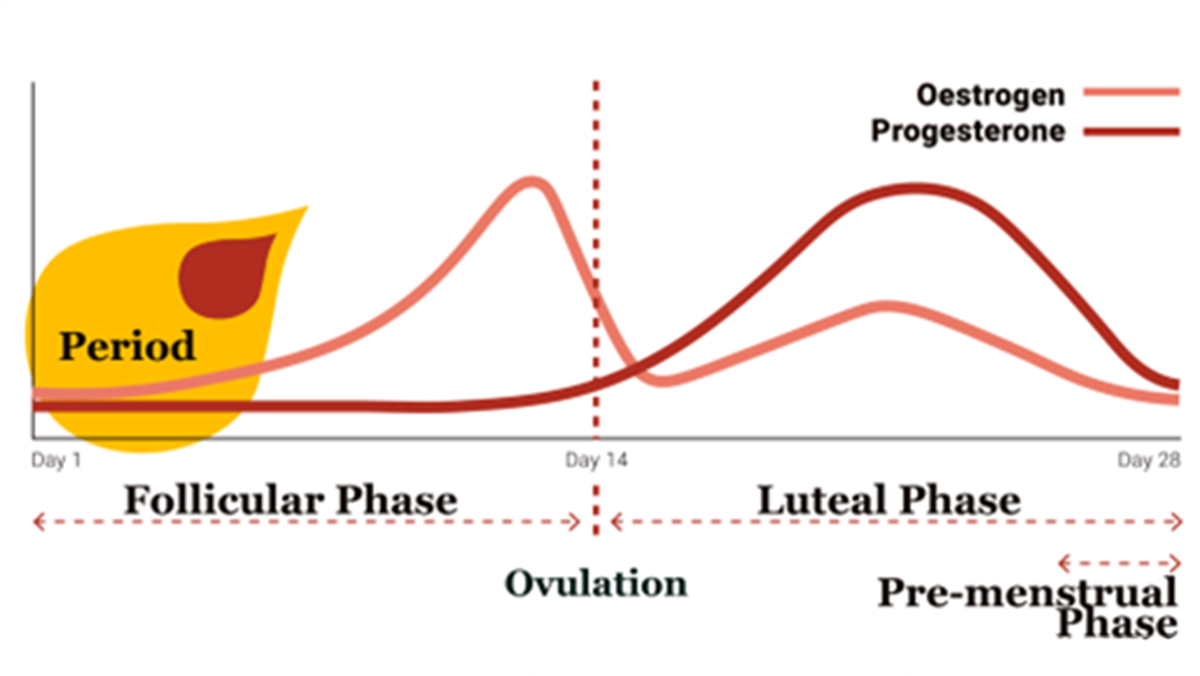
Week one
Menstruation, also known as a period, is the most visible phase of the menstrual cycle, signaling the start of a new cycle.
It is important to manage a period properly for comfort and overall wellbeing. If someone has heavy periods, it’s essential that they monitor iron levels as heavy bleeding can increase the risk of anaemia, so they should consider getting regular (twice a year) iron checks to maintain their energy levels and overall health.
Pain experienced during menstruation, such as cramps, gastrointestinal issues and fatigue is common, but mostly manageable. Various methods are described below to help reduce these symptoms.
Week two
In the second week of a cycle, also known as the mid to late follicular phase, oestrogen levels increase. Oestrogen has important effects on the body, including helping to store energy for exercise and protecting muscles from damage, leading to improved muscular performance and exercise capacity.
Higher-intensity exercise may be preferred during this week as the body is better at recovering and adapting to training. The immune system is also stronger, so the body may be more resistant to illness. Emotionally, females may be more open to feedback and better at handling challenges, which can be helpful in both personal and professional situations.
Week three
During the third week of the menstrual cycle, also known as the luteal phase, females may experience a calmer and more balanced state which may lead to better sleep quality. Anxiety tends to decrease and participants may become less sensitive to pain, making it a period of relative physical and emotional ease.
However, coordination and skill may subtly decline during this phase, so it’s important to warm up thoroughly before engaging in activities that require focus and precision. This helps stimulate the central nervous system and ensures participants remain safe and effective in their movements.
Furthermore, participants may be less inclined to take risks during this time, favouring more measured and deliberate actions. Physiologically, the basal metabolic rate (BMR) increases, leading to an increased core body temperature and a feeling of heightened appetite, potentially resulting in a desire for more food or specific cravings. However, the digestion may slow down and participants could experience water retention, so it’s important to stay well hydrated to support the body’s needs.
Week four
During the fourth week of the menstrual cycle, also known as the late-luteal or premenstrual phase, females oestrogen and progesterone hormone levels decline. This decrease can cause a variety of symptoms, some of which are listed below.
Stress from everyday life and exercise can worsen premenstrual symptoms, especially during the first year or so after menstruation starts, as the body is still adjusting to these hormonal changes. Understanding the link between stress and premenstrual symptoms can help participants to develop effective strategies to manage symptoms, with some suggestions listed below.
Common signs and symptoms and ways to help reduce these
The changes in hormone levels can cause different symptoms across the menstruation cycle. The main negative signs and symptoms are listed below, but sometimes females may feel very confident and have lots of energy and focus. This may vary at different stages of the cycle.
- Bleeding for three to eight days
- Pain during the first few days of a period
- Cramping of the stomach
- Bloating
- Mood changes such as feeling weepy, irritable, tired
- Reduced concentration
- Breast tenderness
- Temporary weight gain
- Headaches
- Low back pain
- Food craving
Some ways to help symptoms
- Pain can be eased by a warm bath, hot water bottle or pain relief. Gentle exercise can also help to reduce pain so don’t be afraid to go to the pool to exercise.
- Gentle yoga exercises can help the pain and cramps. These are outlined in the ‘mastering the menstrual cycle’ workbook – which can be found in the further information section.
- Sleep can help reduce tiredness.
- Good nutrition including fruit and vegetables.
- Participants should tell their coach so they can make some allowances for their cycle.
- Be prepared and have a small bag containing menstrual products inside kitbags.
 Period products available
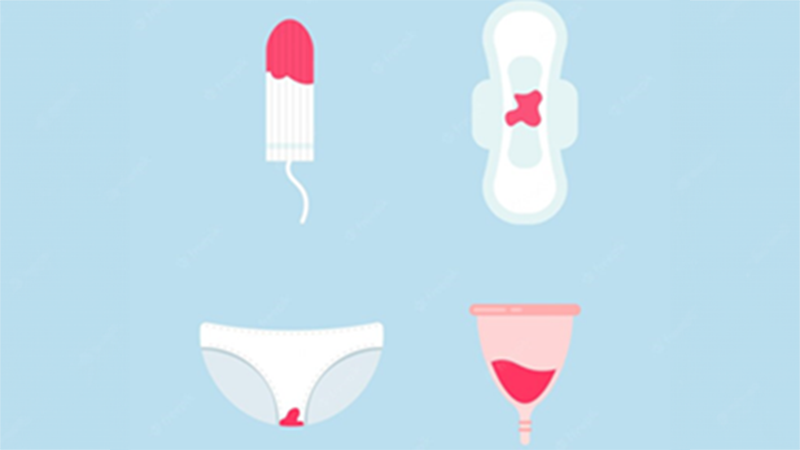
Every female will have a different preference for period products they use. There is no right or wrong product and below are examples of products that can be used.
Sanitary towels
Sanitary towels are often used when females first start their periods. They come in different sizes, different thicknesses and absorbency so different towels can be used for different times of the day or night and different flow days. However, they cannot be used in water.
Tampons
There is a myth that tampons should not be used when first starting a period. This is untrue as tampons are safe to use on a first period.
If someone is comfortable inserting and using tampons, then there is no age limit to their use. Tampons come in different shapes and sizes. Some have applicators which some may find easier initially than non-applicator types. There are different thicknesses for different flow levels so it’s a good idea to use heavier flow ones for longer training sessions to avoid the need to change them.
However, participants shouldn’t be afraid to speak to their coach if they need to change a tampon during a training session. Organic products are now becoming more readily available and are generally more sustainable than plastic applicator types.
Period pants
Period pants under a swimming costume can be used for training and in Swim England competitions for those athletes who normally use sanitary towels. The policy for period swimwear is available here.
Period pants can last all day and absorb the same amount of blood as three to four tampons, so don’t need the regular changing as with other types of products. They are useful for training on land as well. However, they are generally more expensive than other forms of sanitary wear.
 Menstrual cups
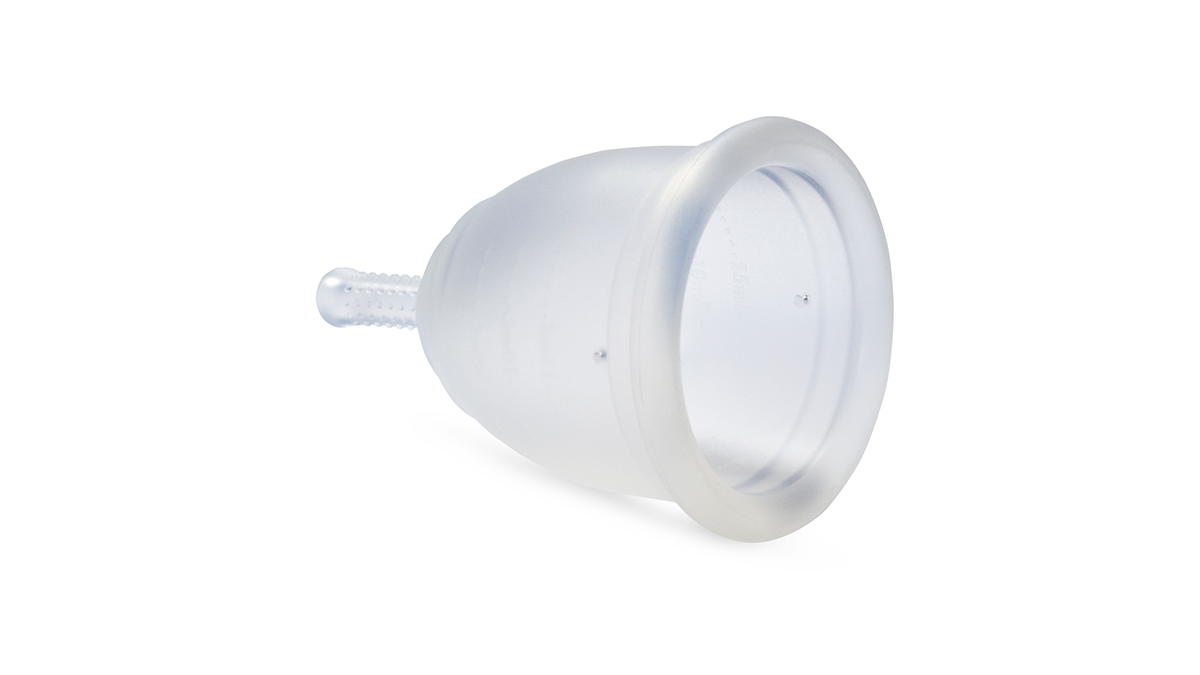
Menstrual cups are a relatively new form of period product that can be used in water and during training.
They are initially difficult to use and rely on the cup being inserted highly in the vagina to suck onto the cervix. It does take practice to start with. The advantages are they can be kept in for eight hours and are both reusable and leak-free.
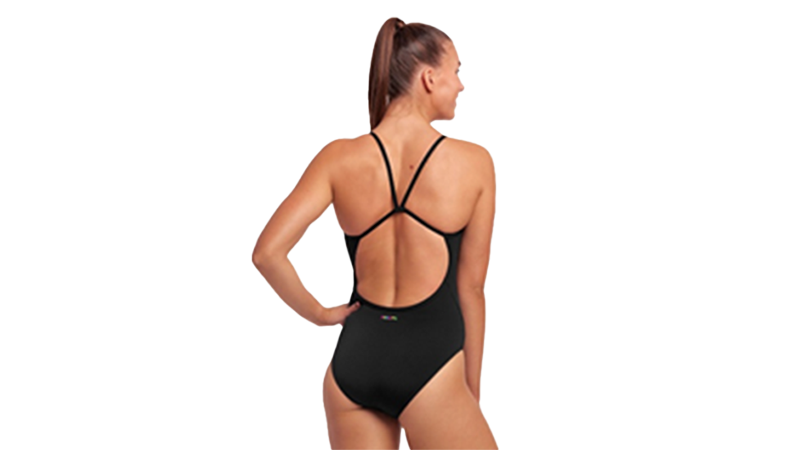 Period swimwear
Period swimwear is starting to become more common, but it is still quite expensive.
They are not greatly absorbent so generally should be used on the days when flow is not heavy, such as at the end of the period or when someone is due to start their period. They are starting to be produced by major swimwear companies.
Advice for training when having periods
- Use drag shorts over a costume or shorts on the poolside for a pre-pool routine. Clubs should encourage all athletes to wear shorts whilst doing a land-based warm-up.
- If a participant is experiencing symptoms during their period, exercise is often good for pain relief. Coaches may adapt sessions to meet a participants’ specific needs if they cannot manage the workload.
- It may be useful for participants to track and monitor their periods using an app or writing in a training diary.
- Athletes are encouraged to talk to their coach so they are aware of when athletes are having their period.
- Coaches should not penalise an athlete for having a period but should recognise it and manage it positively.
- An athletes’ privacy and dignity should be maintained by the coach and other team members.
Managing periods during a competition
A participant has the capacity to perform at their best on any day of their menstrual cycle, but their symptoms might affect their ability to do so. It’s important to note that this can vary greatly from person to person, as some females may feel stronger while on their period.
Andrea Spendolini-Sirieix winning her 2022 Commonwealth Games gold medal while on her heaviest flow day is a recent example of this.
Extensive research has shown that the menstrual cycle generally does not significantly impact aerobic performance, despite potential changes in metabolism. Moreover, it has been established that key factors such as V̇O2Max (maximal oxygen uptake) and lactate threshold (both are critical predictors of endurance performance) are not affected by the menstrual cycle. Therefore, from a physiological standpoint, females should be able to perform at their peak, regardless of where their competition falls within their menstrual cycle.
The priority is all about managing the symptoms (as described above) so that participants can focus on their performance. Here are some other practical tips to help on the day of a competition:
- Plan – if an athlete tracks their period, they should be roughly aware of when it might begin. They should ensure they have a ‘caught short pack’ (a spare pair of pants, tampons or sanitary towels and two paracetamols for pain relief), period swimwear and other necessities.
- Use a robe to put on after the race to cover up.
- Use shorts on the poolside to do exercises.
- Inform the team manager and coach if necessary.
Support from clubs
Creating a support network to assist current and future generations of female athletes in their development and success is crucial.
This begins with raising awareness about the menstrual cycle and promoting its normalisation so that females do not feel isolated when experiencing this completely normal and healthy cycle.
Here are a few examples of how clubs can support their female athletes:
- Identify female athletes that the younger female athletes could turn to if they do not yet feel comfortable speaking to their coach.
- Develop parent support groups so that they can also interact and work with each other to support.
- Ensure the club kit is suited to when a female athlete is on her period.
Health issues that can cause changes to the cycle
The following are issues that may lead to changes in the timing and severity of periods. A regular period is a good sign of health. Any changes or periods becoming irregular may be caused by the following, so it is useful to be aware:
- Poor nutrition/ insufficient food intake
- Stress
- Lack of sleep
- Poor recovery after training
- Excessive exercise in relation to food intake
- Contraceptives
- Psychological fatigue e.g. exams, competitions
- Travel, especially flights
When to seek medical advice
Females should seek medical advice from their GP if they have any of the following:
- Debilitating cramps – severe cramps preventing daily activities and not relieved by over-the-counter pain relief.
- Severe mood changes.
- Hourly changes of menstrual products – having to change a tampon or sanitary towel more than once an hour.
- Irregular periods or no periods by the age of 16 – most females have started their periods between the ages of eight and 15.
More information and medical advice can be found on the NHS website, including a video to illustrate the menstrual cycle.
Further information
A few videos have been created by Aimee Booker, Commonwealth champion, and the Well HQ.
The links to the videos and some further information, including a Well HQ information sheet on the menstrual cycle, have been provided below.
- Information for aquatic athletes managing their period
- Video by Aimee Booker Commonwealth Champion 2018
- Well HQ menstrual cycle video
- Well HQ menstrual cycle workbook
FAQs
Please click here to see all our frequently asked questions.