 Swim England
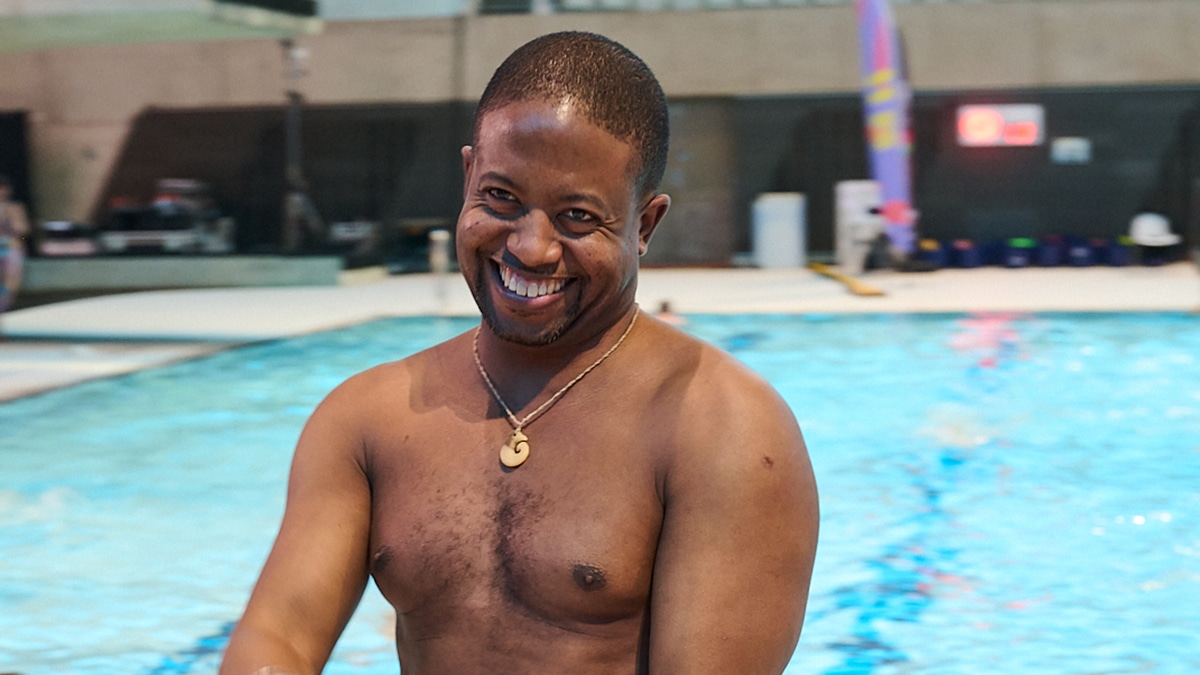
Black History Month: André Blackman Q&A
4 October 2024Throughout October, Swim England is celebrating individuals from all aspects of our sport who are championing equality as part of Black History Month.
Here André Blackman discusses his love of the water and dealing with the misconceptions which he has faced as a Black swimmer from the LGBTQ+ community.
Tell us a bit about yourself, André?
I’m born and bred in Barbados. My mother is from Grenada in the Caribbean, and I grew up between the two islands. I’ve lived here and there, and I’m now in the UK. I came to do my Masters in 2008, made great friends and fell in love with the country. And I haven’t left.
And in terms of swimming, how did you get involved in aquatics?
By accident really. It was prescribed for me by my doctor. As a child, I had a lot of food allergies, which would manifest itself, in some instances, as having a severe asthma attack. I couldn’t breathe and what the doctor suggested was to help build the chest cavity and to help regulate breathing. One of the things that help save a life if you’re having an anaphylactic shock is the ability to control your breathing until you can get medication if it’s not near you. So that’s why I got into swimming. The first two months were difficult because it turned out, I had an issue with the chlorine as well, but I got over that because I fell in love with swimming. It’s the one sport that I stuck to from the age of eight until now. I’m not telling you my age, but many, many, many years later, I have still stuck to it, and it’s it’s still my go to sport that calms me. It keeps me collected. I think in part it could be the island boy in me – a body of water is calming. So that’s how I got into swimming and I and I have stuck with it. I’ve made great friends, it’s kept my body fit and it’s kept my body moving. And I enjoy it – it’s good for my mental health.
You’re a member of Out to Swim. How did you find out about them and join them?
I joined them in 2018 and I joined them because of a breakup. I figured I needed to find a community and get back into doing what I loved doing so I turned to swimming. I met a friend in Brighton and he encouraged me to come back to Out to Swim and they welcomed me with open arms. They were very patient with me because, at the time, I was very shy, very, very reserved. And I’ve been with them almost seven years and I love every minute of it. They’re all very nice people – annoyingly nice people!

And what is it about Out to Swim do you think that makes it such like a lovely place to be or such a welcoming place?
Well, I think it’s empowering because it’s a platform to ensuring that members are empowered. There are no barriers. As an Out to Swim member, it provided a foundation to nurture a network of relationships among like-minded people. The Out to Swim community work together to meet the needs of its members, which I absolutely love, and they promote the wellbeing of all. They’ve done this quite cleverly through the provision of social support and services, the transmission of culture and knowledge of its LGBTQ+ people and members. The value derives from positive connections between people that can benefit wider society.
In terms of that support for the LGBTQ+ community, why do you think clubs like out to swim are so important?
It can be lonely, particularly for individuals who are not from this country, if you’re just coming out. I came to this country as a university student and I moved to London, I didn’t have a community to connect to. So, joining Out to Swim addressed all of my needs in one because I was able to make new friends. The social activities they engage with are designed around cultural themes. They have used a cultural angle from one of the minority groups so that others can understand and appreciate or look at the same situation, but through different lenses. So it’s educational but in a fun way, forcing you to grow and broaden horizons.
Do you think that consideration of intersectionality is quite important?
Yes, any celebration of diversity is education. It’s fun and the way it is structured within Out to Swim is genius because you don’t get the feel as though you have pen and paper and you’re being forced to study for an exam. It is in those forums when you’re sitting down and you’re breaking bread together, or you’re having a drink, or a meal and the walls come down and you see people in a different light. They get more relaxed around you. You get to know more about them and you get closer. And that’s how respect and that’s how bonds are formed – that’s how you learn about each other. It removes barriers.
You mentioned you had this love of the water or love of swimming from eight years old, so where does that come from?
That’s come from my dad. He was brought up swimming and he he wanted to ensure that his children were brought up swimming. There are only three of us, my siblings and I and, as you can imagine, being on an island in Barbados, you would think that everybody could swim. But we don’t have many black swimmers, either formally or informally, anywhere in the world. When you look at the representation on swimming teams globally, representation is not where it could be and that’s for many different reasons. A lot of it stems from culture – cultural or socio-economic reasons or cultural stigmas. So, it varies depending on who you speak to and what their experience is growing up. If you speak to an African American, their views would be different to someone like me from the Caribbean or someone from the UK or a country within the continent of Africa. Their perspectives might be different as to what those barriers were that prohibited them from getting involved in swimming. But from my context, my siblings and I, we all swim because of my father.
Often it is parents’ influence. Do you think that’s probably the most important thing from getting involved with something at a young age?
Of course it is. It’s very important because a child is a product of his or her environment. If you have a child in a household that speaks positivity, that child will speak positivity. Whereas if you have a child in a negative household, that child will copy and emulate that. So, my challenge to parents who don’t swim would be to encourage your children to try something different to what you have experienced as a child because you want them to have a better life or better experiences than you do.
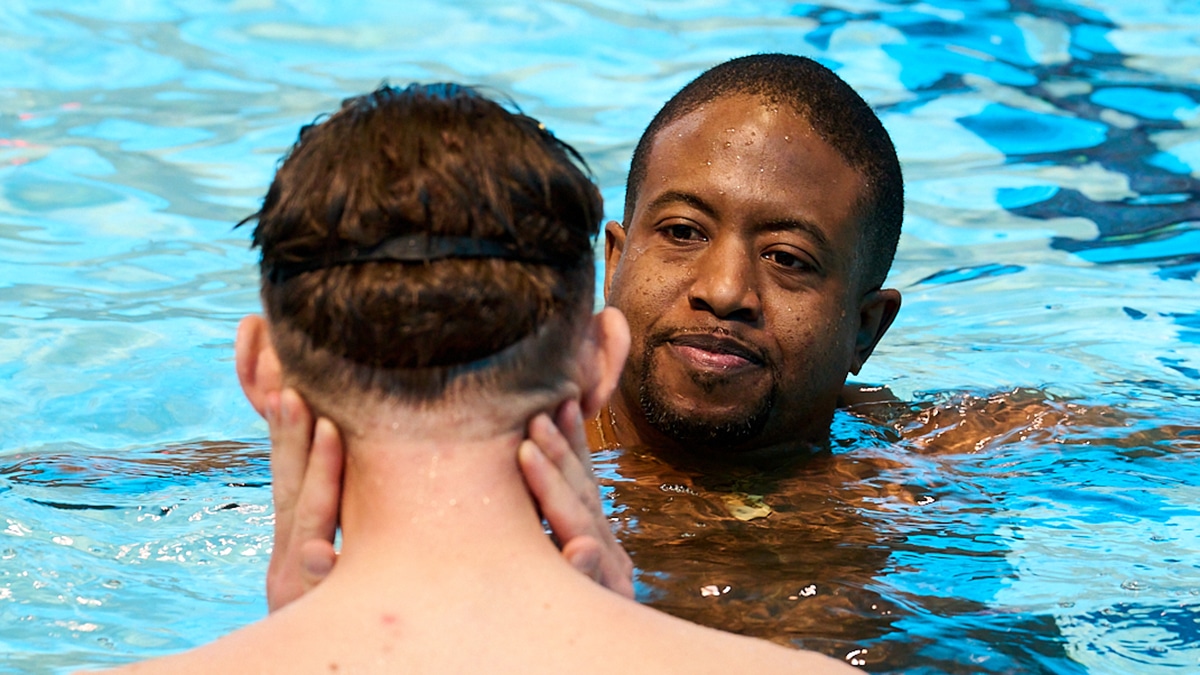
Do you think there are additional barriers that if you’re a person of colour and someone from the LGBTQ+ community that you need to consider? Or what’s been your experience of that?
Well, my experience is purely from cultural and community barriers point of view as an LGBTQ+ and person of colour. The reason why I say cultural and community barriers is that, when within black communities within my friends group, I’m the only one that actually swims. In terms of making participation in swimming, feeling safe or welcoming, I think that’s an angle that could be investigated by the individuals because a lot of them think that ‘oh, well, I can’t swim. Why would I want to do this?’ This is a rich people sport or is a white sport or it’s an exclusive sport – and none of these things are true. So, it’s a matter of perspective and what they have been told and what that group think. I think some black adult swimmers might fear rejection if they were to go to a pool and to try at their age. I think there’s that in any community where they don’t want to try anything new. So, it’s not necessarily about colour. I put it to culture and cultural stigmas and perceptions that you were brought up with within your community.
There are some classic misconceptions that Black people are predisposed not to be able to swim, such as they have got heavier bones.
The heavier bones thing is utter, utter nonsense. So, when it when it comes to even look at the African American context, stories have been passed on from their parents to children that we don’t swim because we can’t swim. It goes as far back as, within the African American context, when things were segregated and you had swimming pools in in affluent neighbourhoods and that mentality of Blacks don’t swim. One can argue that’s where it started from. But my argument in 2024 is that mentality needs to be broken. So the power lies with the current generation to say right, I want my child to learn this life saving skill. You need to be able to adapt to a situation, whether it be to save your life or to save somebody else’s life and is more about equipping your children or the next generation to deal with whatever comes their way. And swimming is an important skill because we live on a blue dot that is 70% water. It’s a no brainer.
It’s a life skill, and it’s making sure everyone understands that and understands it is possible for them to get involved
Exactly that. When I was in Barbados, I coached swimming for a bit at the convent in Saint Michael. My oldest student was 65 years old and I loved her attitude. But in that context, it was a very small group. There were no outsiders. When you’re joining a swimming club, it could be jarring for someone who’s probably an introvert or someone who’s more cautious about meeting new people – it’s those kinds of barriers. It’s about changing your mindset, what do you think of the world, how you view yourself and what you think is possible and what’s not possible.
Do you think aquatics is an inclusive sport?
Yeah, I think to some it’s inclusive when you look at the dissection of swimmers the ages, genders, adaptability to different abilities. But when it comes to cultural and racial inclusivity, which is where I think you want to focus on, we’re not there yet. However, there are noted efforts by organisations, particularly Out to Swim, to increase diversity through many means. So, for example, community outreach or offering scholarships to individuals who may have the desire to learn to swim or to continue swimming, but not necessarily have the financial means. To encourage the next generation to be more interested in the sport, you can’t wait until they are 18 or 20. Start from the age of five and introduce swimming at school, particularly in black or ethnic minority communities. They get the taste from there and then you nurture them so they can pass it on to their own, to the next generation.
Why is Black History Month so important?
It’s significant because it provides a dedicated time for everyone to recognise and celebrate the contributions and struggles of the Black community. It encourages dialogue and challenges systemic racism, which is necessary for progress. Learning about and engaging with other cultures helps break down stereotypes and misconceptions. It demonstrates the resilience of Black communities — where we’ve come from, where we are now and where we are going as not just Black people but as part of the human race. There’s enough on this planet to be shared equally for all of us to thrive and to be as one.