 Swim England
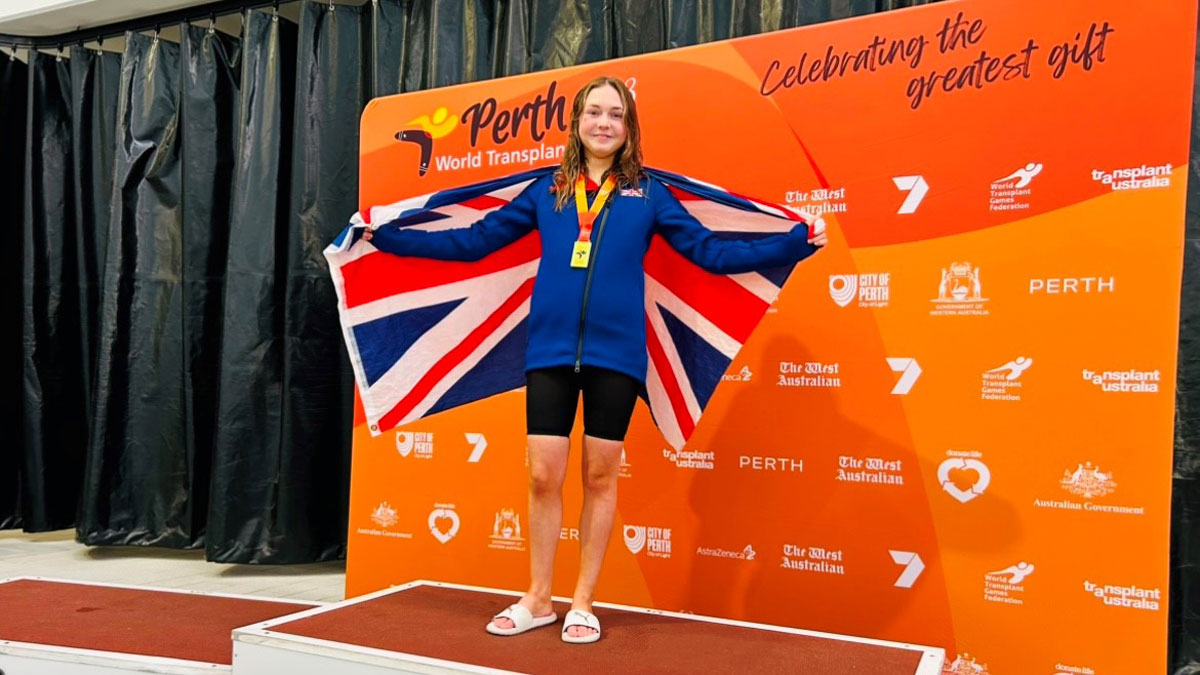
Swimming helps transplant athlete Ava thrive – 11 years after lifesaving surgery
5 August 2025Ava has faced more medical challenges at her young age than many experience in a lifetime – but swimming has been a constant source of strength, motivation and recovery.
Born with a rare genetic condition called Ornithine Transcarbamylase (OTC) deficiency, Ava was diagnosed at just nine months old after being rushed to hospital several times while seriously unwell.
OTC deficiency affects the body’s ability to remove excess nitrogen, leading to a dangerous build-up of ammonia in the blood – a potentially life-threatening situation that can result in brain damage, coma or death if not treated.
By the time she was 10 months old, Ava had become anorexic due to the condition and its associated medication. She underwent surgery to have a gastrostomy fitted, enabling her to be fed and medicated directly into her stomach.
Despite ongoing illness throughout her early childhood, Ava found happiness in the pool and quickly developed a love for swimming.
At the age of four, her condition became increasingly unstable, and she was listed for a liver transplant. A year later, Ava underwent more than nine hours of surgery and was transferred to intensive care to begin what would be a long and challenging recovery.
Returning to the water
Post-transplant complications included a serious episode of rejection and repeated chest infections linked to her immunocompromised state.
As soon as she was physically able, Ava returned to the water – though initially only able to swim for 15 minutes before tiring.
Her recovery extended beyond the physical. Having never formed a relationship with food due to her condition, Ava remained fully gastrostomy-fed. Although doctors hoped she would begin eating independently, progress was slow.
She was referred for therapy at the age of eight and, after two years on a waiting list, began intensive sessions to help her understand hunger and overcome her aversion to food.
By the age of 10, Ava’s gastrostomy was removed – a major milestone. Her diet remains limited, but she now eats enough to fuel her training and growth.
Swimming played a key role in this progress, not only increasing her appetite but also encouraging her socially. Being around her peers at galas, watching them enjoy food, and feeling part of a team helped change her relationship with eating.
Representing Great Britain
As someone who is immunocompromised, she is also more susceptible to illness – which can make it difficult to maintain a full training schedule. Despite all of this, she continues to show exceptional commitment and perseverance.
Now 11 years post-transplant, Ava continues to train and compete in meets across Yorkshire. She also takes part in the British Transplant Games every year – a four-day event that sees transplant recipients of all ages compete in a variety of sports.
This year she has been selected to represent Great Britain once again at the 2025 World Transplant Games in Dresden, Germany. It will be her third World Games, having previously competed in Newcastle (2019) and Perth, Australia (2023).
Her story is a powerful example of how swimming can help to support the health of the nation, providing great experiences in water, for all, for life.
As part of Swim England’s Diversity and Inclusion Action Plan the national governing body is committed to supporting swimmers such as Ava, who compete within para-swimming events that are not currently classifiable under World Para-Swimming.
To find out more about the upcoming World Transplant Games, please visit: https://wtg2025.com/
If you would like to know more about the Transplant Swimming Club, email: [email protected]
If you want to find out more about transplant and organ donation, visit: https://www.organdonation.nhs.uk/