 Swim England

Promoting your club
27 April 2025Promoting your club to prospective members is really important for the sustainability and growth of your club. Here are some top tips on how to reach and engage with new participants, volunteers and communities.
Ensuring your website is up-to-date, accessible, and easy to navigate is important when trying to attract new members as it is likely to be the first interaction they have with your club.
Here are three pieces of advice to follow:
1. Regularly update content: Keep all information on your website accurate and current.
Consider the following:
- What the club offers – do you list disciplines, squads and pathways?
- Timetable – do you have a clear programme of training and where it takes place?
- Who’s who in the club – is there a page on your website introducing your club personnel and committee?
- How to contact and/or join your club – is there a monitored email address for enquiries and is it a simple process to join the club?
- Policies – are they easy to find on the website?
- Fun elements – do you have an area on your website showing how you bring your club together? (E.g. club outings and gatherings).
- Club reviews – to help potential new club members make a decision to join your club, do you have any current or previous club member/parent testimonials that you can share?
- Swim England endorsement (Club Affiliation) – is this clear on your homepage?
- Volunteering opportunities – is there a simple way for people to get involved to be able to support the club?
- Member feedback – do you have an area where members can provide feedback on their experiences?
2. Make your website easy for everybody to use:
- Add text descriptions for images – Include “alt text” (a short-written description) for each image so that people using screen readers can understand what the image shows.
- Allow keyboard navigation – Ensure people can move through your site using only a keyboard (like the “Tab” key) without needing a mouse. This helps users who rely on keyboards for browsing.
- Use high-contrast colours – Choose colours with a strong contrast, like dark text on a light background, so that text is easier to read for people with vision difficulties.
3. Streamline navigation: Design a clean, intuitive website structure so users can easily find what they need. Use clear headings and labels for each section and include a search function to improve the user experience.
Website support
If you need support building and managing your website, search for a website or digital marketing agency who can guide you through the process.
Your logo is one of your most important assets and should sit at the heart of your identity. It gives you a unique mark that you can use across all channels and all your communications.
When creating a logo for your club, take into consideration how you want to be viewed. Make an impression and be memorable.
You should use your logo on all communications, so people start to associate your club with the information they are viewing. If you’re consistent on its use, your members will start to recognise it and the collateral created around it. Examples of when to include it:
- Website
- Email footer
- Squad and training kit
- Letters
- Posters
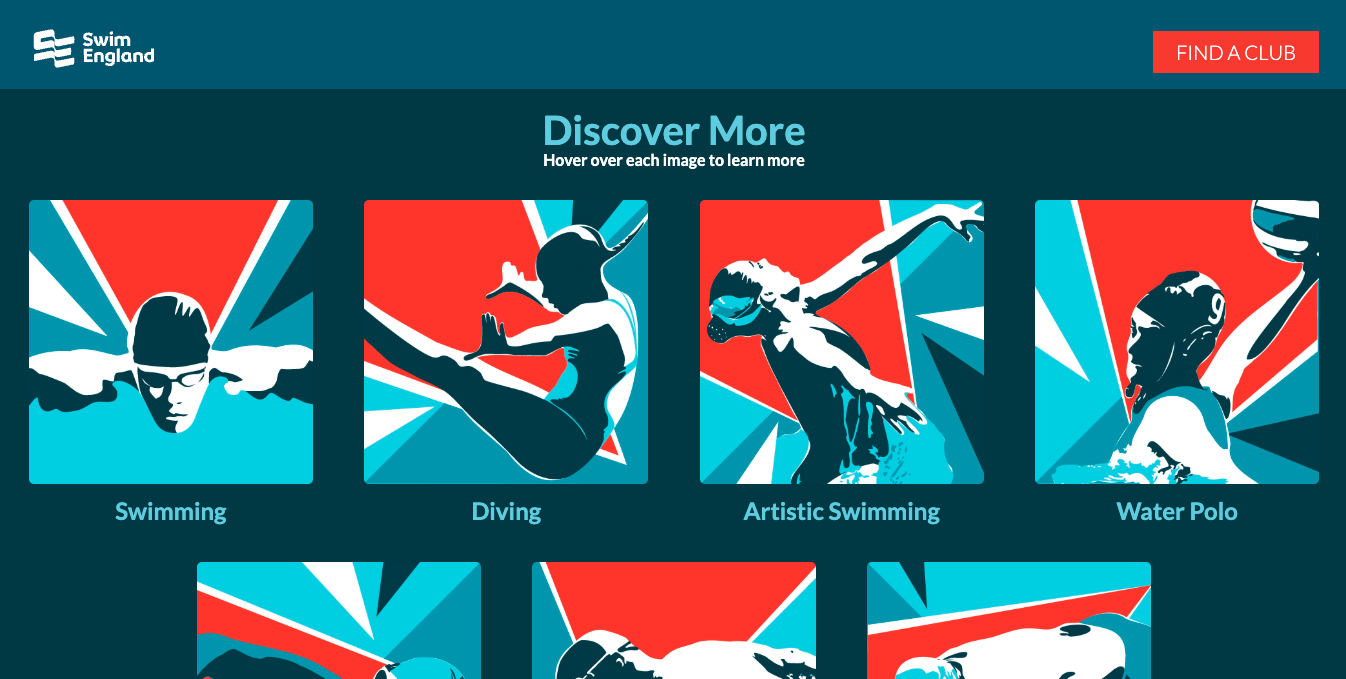
Here is an example of how we have integrated the Swim England logo into our Discover website:
You can engage with current club members and potential new starters by using social media channels such as Facebook, Instagram and TikTok.
Capture interesting videos and photos that tell the story of your club and post them on your channels for new members to view.
Ensure you have a two-way dialogue with your followers to allow them to fully engage with the club. For example, when posting content, comment or add a reaction to your followers’ comments.
If you have a small budget to promote your club, you could use paid social media to boost your content to help it reach a wider audience.
You can learn how to boost a post on Facebook here.
For more guidance on how to use social media, read our Social Media Guide for Clubs.
Having a good relationship with the operator of your facility has many benefits – one of which is the opportunity to work with them to promote your club within the facility. This is a great way to reach people already accessing your pool.
Talk to them about using the following methods on poolside and in communal areas to publicise your club:
- Posters
- Digital screens
- Pull-up banners
- Leaflets
You should also engage with your local area including schools, Active Partnerships, community and cultural groups.
Being active and part of a club or group can have lots of benefits for individuals, families and communities. Creating partnerships can raise your club’s profile locally, develop the reputation of the club and create new opportunities like community referrals.
Promoting your club may involve distributing flyers at their events, hanging posters at their facilities and contributing to conversations on Facebook groups.
Local partnerships can also help increase volunteers and workforce through access to a wider range of people from diverse backgrounds who may want to get involved.
Six steps to develop partnerships within the community:
- Find any gaps in your provision or opportunities to engage a new audience
- Identify partners who work with those audiences already and could support the club in their outreach
- Compile a list of mutual goals/outcomes between the prospective partner and the club – and think about how the club activity could support the partner achieve some of their goals
- As well as looking for new partners, utilise existing connections for example, relationships from projects and members’ connections
- Approach the targeted partners with information about the club, your proposal, and how it could be mutually beneficial
- Support your partners by promoting them on your website and on social media, and maintain regular and open communication with partners
A great way to share your stories with the general public is through the local media.
Reach out to your local radio station, newspaper and TV broadcaster to start building a relationship with their journalists. You may have a story ready to share, or you may simply want to introduce yourself and your club.
Story ideas may include:
- Club anniversaries and celebrations
- Fundraising events and opportunities
- New coaching structures
- Incentives to drive new membership e.g. any taster sessions being held
- Successes at county, region or national level
- Major events
- Athletes to watch
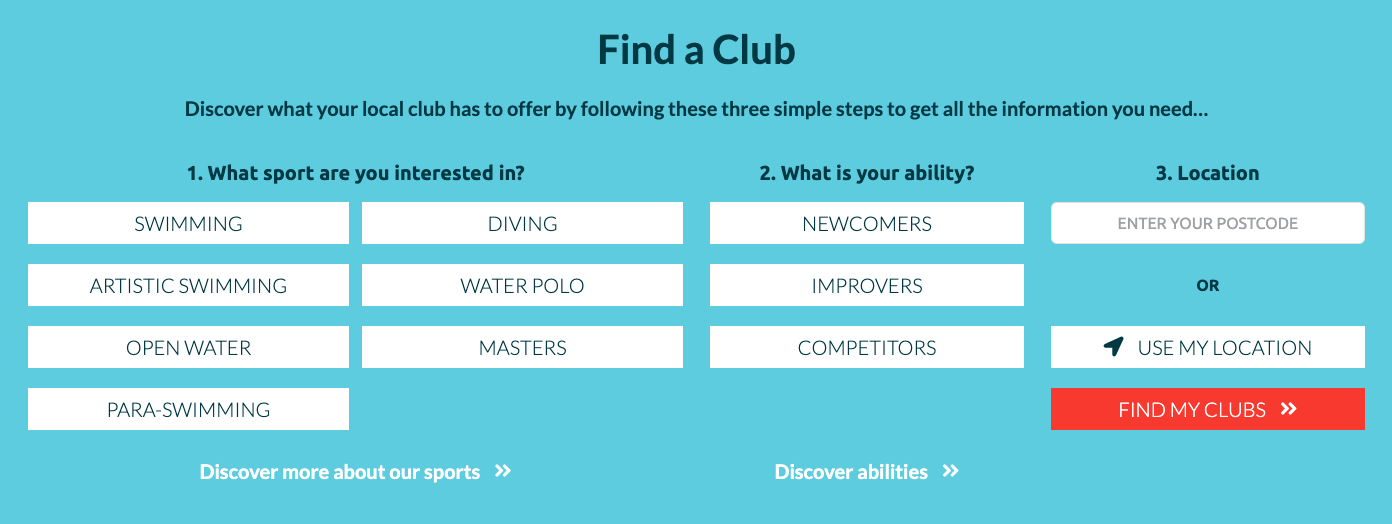
Our Swim England club finder tool is a search function that allows new members to find a local club for the aquatic sport they wish to participate in.
It provides details of every Swim England affiliated club, the sport(s) they offer, the ability they cater for, and if the club has space for new members. There are also links to club websites.
We encourage all clubs to regularly check their details on the tool to make sure they are up-to-date. Updates can be made on the Online Membership System and will take up to two days to show on the club finder tool.
Image consent
Whenever you take a photograph of a person, you should get written consent to do so. For under 18s, you should follow the guidance set out in Wavepower.